



Love does not check passports. But the law does. If you are a South African citizen planning to marry someone who is not, or if you are a foreign national planning to marry in South Africa, your wedding involves a layer of legal complexity that most couples are not fully prepared for. The requirements are manageable and the process is navigable, but only if you understand what is required, what the marriage means for your partner’s legal status in South Africa, and what protections need to be in place before you say I do. Getting this right before the wedding avoids the kind of administrative and legal difficulties that can cast a shadow over what should be one of the best chapters of your life.
Is a Marriage Between a South African and a Foreign National Legally Valid in South Africa?
Yes. South African law recognises marriages between South African citizens and foreign nationals provided the marriage is conducted in accordance with South African law and all the relevant requirements are met. The Marriage Act 25 of 1961 governs civil marriages in South Africa and applies to all couples marrying here regardless of nationality. A marriage conducted in South Africa between a South African and a foreign national is a valid South African marriage and is registered in the South African marriage register.
What changes when one partner is a foreign national is the documentation required to marry, the immigration implications that flow from the marriage, and in some cases the recognition of the marriage in the foreign national’s home country. Each of these deserves careful attention before the wedding date is set.
What Documents Does a Foreign National Need to Get Married in South Africa?
The documentation requirements for a foreign national marrying in South Africa go beyond what a South African citizen needs to produce. Understanding what is required early in the process prevents delays that can affect wedding timelines significantly.
A foreign national marrying in South Africa must produce a valid passport. They must also produce a document from the competent authority in their home country confirming that they are not already married and that there is no legal impediment to their marriage. This document is commonly referred to as a certificate of no impediment or a letter of no objection to marriage, and the specific name and format varies between countries. In some countries this document is issued by a government department. In others it is issued by a court or a civil registry. Obtaining it can take weeks or months depending on the home country, which is why the process needs to begin well in advance of the planned wedding date.
If the document is in a language other than English, it must be accompanied by a certified translation. It may also need to be apostilled or legalised depending on whether the issuing country is a signatory to the Hague Apostille Convention. An apostille is a form of international certification that authenticates a public document so that it is recognised in another country. South Africa is a signatory to the Convention, and most documents issued in signatory countries can be apostilled rather than going through the longer legalisation process. If the issuing country is not a signatory, the document must be legalised through the South African embassy or high commission in that country.
If the foreign national was previously married, they must produce proof that the previous marriage has been legally dissolved, either a divorce order or a death certificate of the former spouse, depending on how the previous marriage ended. These documents may also need to be apostilled or legalised and translated if they are not in English.
The foreign national must also be in South Africa on a visa that permits them to be in the country at the time of the marriage. Not all visa categories permit a foreign national to remain in South Africa indefinitely, and marrying a South African citizen does not automatically regularise an irregular immigration status or extend a visa that is about to expire.
What Does Marriage to a South African Citizen Mean for a Foreign National's Immigration Status?
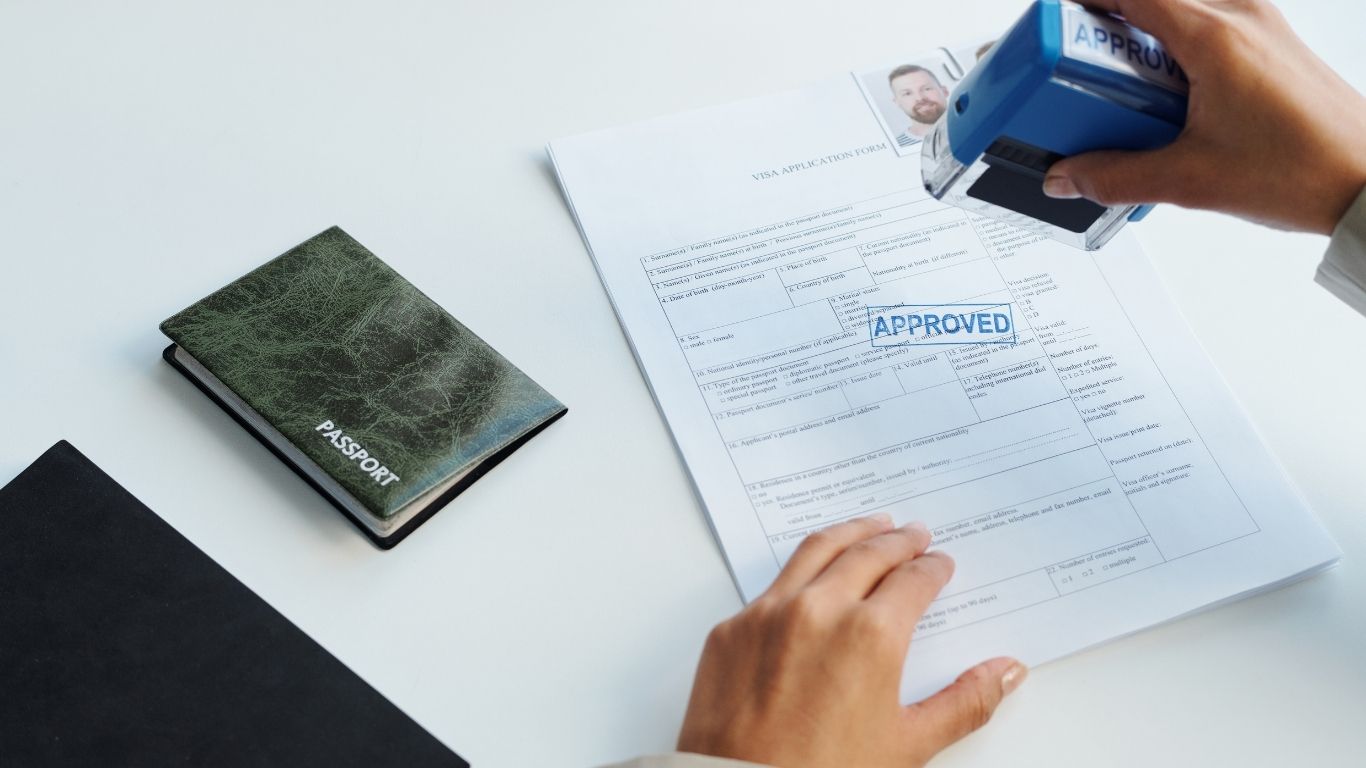
This is the question most couples in this situation are most anxious about, and it is one where the law is more nuanced than most people expect. Marriage to a South African citizen does not automatically give a foreign national the right to live and work in South Africa permanently. The immigration process is a separate step that must be actively pursued after the marriage has taken place.
Under the Immigration Act 13 of 2002, a foreign national who is married to a South African citizen can apply for a spousal visa, more formally referred to as a relative’s visa based on spousal relationship. This visa allows the foreign national to remain in South Africa for the duration of the visa and to apply for authorisation to work or study in South Africa while the visa is valid. The spousal visa is not permanent residence. It is a temporary status that must be renewed and that is dependent on the marriage remaining in place.
To apply for a spousal visa, the couple must be able to demonstrate that the marriage is genuine. The Department of Home Affairs requires evidence of a bona fide spousal relationship, which typically includes proof of cohabitation, joint financial arrangements, correspondence addressed to both parties at the same address, and other evidence of a shared life. The requirement to demonstrate a genuine marriage exists because spousal visas have historically been a route through which fraudulent marriages were used to obtain immigration status. Couples in genuine relationships should have no difficulty meeting this requirement, but gathering the right evidence in the right format takes preparation.
After five years of permanent residence in South Africa, a foreign national may apply for South African citizenship by naturalisation, provided they meet the relevant requirements at that time. Marriage to a South African citizen is not a shortcut to citizenship. The process is sequential and each step has its own requirements and timelines.
What Happens to the Foreign Spouse's Immigration Status If the Marriage Ends?
This is one of the most important questions for any foreign national married to a South African, and it is one that needs to be understood before the wedding rather than discovered during a crisis. If the marriage ends, whether through divorce or the death of the South African spouse, the foreign national’s spousal visa is directly affected.
Where the marriage ends in divorce, the foreign national’s right to remain in South Africa on a spousal visa falls away because the basis for that visa no longer exists. The foreign national must either depart South Africa, apply to change their visa status to a different category for which they qualify, or apply for an exemption. The Department of Home Affairs does have provisions for exceptional circumstances, and a foreign national who has been in South Africa for a significant period, has children who are South African citizens or permanent residents, or has other compelling ties to the country may have grounds to apply for a different status. But these outcomes are not automatic and they require active engagement with the immigration process.
Where the South African spouse dies, similar considerations apply. A foreign national who was on a spousal visa does not automatically acquire permanent residence or citizenship simply because their spouse has died. The visa position must be addressed separately and promptly. This is one of the reasons why estate planning, including a valid will and appropriate financial provision for a surviving foreign spouse, is particularly important in an international marriage. A foreign spouse who is suddenly widowed and facing an uncertain immigration status needs both financial security and legal clarity at the same time, and planning for that possibility before it arises is a profound act of care.
Does the South African Marriage Need to Be Recognised in the Foreign National's Home Country?
Not necessarily, but in many cases yes, and this is an aspect of international marriages that couples frequently overlook until it becomes a practical problem. A marriage conducted and registered in South Africa is a valid South African marriage. Whether it is automatically recognised in the foreign national’s home country depends entirely on the laws of that country.
Some countries recognise foreign marriages automatically provided the marriage was conducted in accordance with the laws of the country where it took place. Others require the marriage to be registered or notified to the relevant authority in the home country within a certain period. Others have specific requirements about the form of the marriage, the presence of witnesses, or the involvement of a consular official. A marriage that is valid in South Africa may not be automatically valid in the foreign national’s home country, which can create complications for the couple if they relocate, for inheritance and property rights in the home country, and for the recognition of children born to the couple.
The practical step is to engage with the embassy or consulate of the foreign national’s home country in South Africa before the wedding to understand what, if anything, needs to be done to ensure the marriage is recognised there. In some cases the couple may need to register the South African marriage certificate with the home country’s civil registry. In others an apostille on the South African marriage certificate is sufficient. In others still the process is more involved. Starting this enquiry early prevents situations where a couple discovers months or years after the wedding that their marriage is not recognised in one of the countries where it matters most.
What About the Antenuptial Contract in an International Marriage?
The antenuptial contract is just as important in an international marriage as in any other, and in some respects it is more important. The matrimonial property regime chosen in the ANC governs how assets and debts are dealt with under South African law. But in an international marriage, both spouses may have assets in more than one country, and the interaction between South African matrimonial property law and the property law of the foreign national’s home country requires careful consideration.
Different countries have different rules about how matrimonial property is treated. Some countries apply community of property as their default. Others apply separation of property. Some countries will recognise a South African ANC. Others will not, and their own rules will apply to assets situated within their jurisdiction regardless of what the South African ANC says. If either spouse owns property, investments, or business interests in another country, the ANC should be drafted with awareness of the cross-border dimension, and in some cases it may be necessary to take advice from a legal practitioner in the foreign national’s home country as well as in South Africa.
Similarly, if the couple plans to relocate to another country after the wedding, the matrimonial property regime that will govern their marriage in that country may be different from the one they chose in South Africa. Some countries apply the law of the country where the couple was first habitually resident after the marriage. Others apply the law of the country where the marriage was solemnised. Understanding the cross-border implications of the ANC before the wedding is essential for couples whose lives are genuinely international.
What If the Marriage Takes Place Abroad and the Couple Then Moves to South Africa?
Where a South African citizen marries a foreign national in another country and the couple then relocates to South Africa, the foreign marriage must be recognised under South African law for it to have legal effect here. South Africa generally recognises foreign marriages that were validly concluded in accordance with the law of the country where the marriage took place, provided the marriage does not violate South African public policy. A foreign marriage certificate may need to be apostilled and translated before it can be registered or relied upon in South Africa.
The immigration process for the foreign spouse moving to South Africa in this scenario is the same as for a foreign national marrying a South African citizen in South Africa. A spousal visa application must be made and the genuine nature of the marriage must be demonstrated. The fact that the marriage took place in another country does not change the immigration requirements or give the foreign spouse an automatic right to live and work in South Africa.
Protecting Both Partners in an International Marriage
International marriages involve more moving parts than domestic ones, and the legal planning that goes into them needs to account for that complexity. Both partners deserve to be protected, not just in terms of the marriage itself but in terms of what happens if circumstances change, whether through divorce, death, or relocation.
A foreign national marrying in South Africa is making their life in a country where they may have limited family support, limited independent legal status, and a dependency on the marriage for their right to remain. A South African citizen marrying a foreign national is building a shared life that may span two or more legal systems, each with its own rules about property, inheritance, and family. Getting the legal foundations right before the wedding, through a well-drafted ANC, updated wills in both relevant jurisdictions where necessary, and a clear understanding of the immigration framework, is not bureaucratic box-ticking. It is the most practical expression of the commitment you are making to each other.
Frequently Asked Questions
Can a foreign national get married in South Africa?
Yes. Foreign nationals can legally marry in South Africa provided they meet the documentation requirements under the Marriage Act. This includes a valid passport, a certificate of no impediment to marriage from their home country, proof that any previous marriage has been dissolved, and a visa that permits them to be in South Africa. The documents may need to be apostilled and translated depending on the country of origin.
Does marrying a South African citizen give a foreign national permanent residence?
No. Marriage to a South African citizen does not automatically confer permanent residence or citizenship. A foreign national married to a South African citizen must apply for a spousal visa, which is a temporary status that must be renewed. After meeting certain requirements including a period of permanent residence, citizenship by naturalisation may be applied for separately.
What is a spousal visa and how does a foreign national apply for one?
A spousal visa, formally a relative’s visa based on spousal relationship, allows a foreign national married to a South African citizen to remain in South Africa and to apply to work or study here. The application requires evidence that the marriage is genuine, including proof of cohabitation and shared financial arrangements. The application is made to the Department of Home Affairs.
What happens to a foreign spouse’s visa if the marriage ends in divorce?
The spousal visa is tied to the marriage. If the marriage ends in divorce, the basis for the spousal visa falls away and the foreign national must either depart South Africa, apply to change their visa status, or apply for an exemption based on exceptional circumstances. This process must be actively managed and is not automatic.
Does South Africa recognise marriages conducted in other countries?
Generally yes, provided the marriage was validly conducted in accordance with the law of the country where it took place and does not violate South African public policy. A foreign marriage certificate may need to be apostilled and translated to be used in South Africa.
Will a South African marriage be recognised in the foreign national’s home country?
It depends on the laws of that country. Some countries automatically recognise foreign marriages. Others require registration or notification within a specified period. Couples should engage with the relevant embassy or consulate before the wedding to understand what steps are needed to ensure the marriage is recognised in both countries.
Does an antenuptial contract signed in South Africa apply to assets in another country?
A South African ANC governs the matrimonial property regime under South African law. Whether it is recognised in another country and whether it applies to assets situated there depends on the law of that country. Couples with assets in more than one country should take legal advice in each relevant jurisdiction to understand how the ANC interacts with local property law.
What documents are needed to marry a foreign national in South Africa?
The foreign national needs a valid passport, a certificate of no impediment to marriage from their home country, proof of dissolution of any previous marriage, and a valid visa permitting them to be in South Africa. Documents in languages other than English must be accompanied by certified translations and may need to be apostilled or legalised depending on the issuing country.
International Love Deserves International-Standard Legal Planning
Marrying someone from another country is one of life’s great adventures. It is also one of its more legally complex undertakings, and the couples who navigate it most successfully are the ones who take the legal planning as seriously as the wedding itself. At Shapiro & Haasbroek Attorneys, we assist couples across South Africa with the full range of pre-marriage legal planning, including antenuptial contracts, estate planning, and guidance on the legal implications of international marriages. We work with clients across South Africa and travel where our clients need us. Contact us today to make sure your international love story starts on the strongest possible legal foundation.
Love crosses borders. Make sure your legal planning does too.