
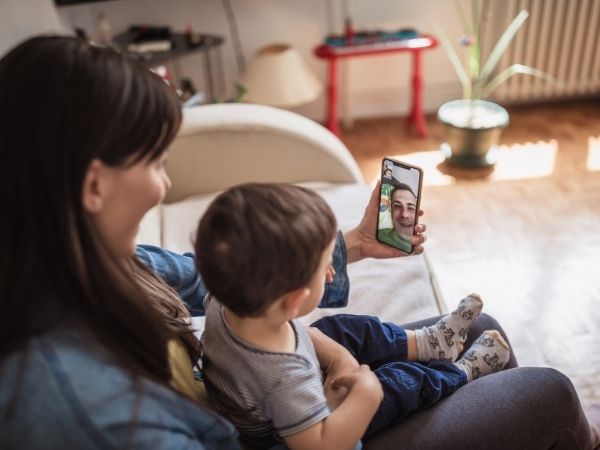


You have built a relationship with your partner’s child. You are present at school events, at the doctor, at the dinner table, and at bedtime. You have become, in every practical sense, a parent to that child. Now you want to make it official. You want the legal relationship to reflect the real one. Stepparent adoption in South Africa makes that possible, but it is a more involved process than most people expect, and it raises questions that need honest answers before you begin. Who needs to consent? What happens if the biological parent refuses or cannot be found? What does adoption actually change legally? And is adoption even the right option, or would a different legal route better serve your family? This post works through each of those questions so you can approach the decision with a full understanding of what is involved.
Can a Stepparent or Life Partner Legally Adopt a Child in South Africa?
Yes. The Children’s Act 38 of 2005 expressly permits a stepparent to adopt a child, and it also permits a person who is in a permanent domestic life partnership with the biological parent to adopt that parent’s child. This means the right to adopt a partner’s child is not limited to married couples. A same-sex partner, an unmarried partner in a long-term committed relationship, and a spouse in a formal marriage are all potentially eligible to adopt a partner’s child, provided the relevant legal requirements are met.
The Children’s Act defines adoption broadly enough to accommodate the full range of modern family structures, and the courts have applied it in ways that reflect the reality of blended families in South Africa. A stepparent adoption is not treated as a lesser form of adoption or as a simplified administrative process. It is a full legal adoption that goes through the same court process as any other adoption, with the same requirement that the court must be satisfied that the adoption is in the best interests of the child. The fact that the adopting parent is already part of the child’s family does not remove the need for proper legal process. It simply means the starting point is usually a closer and more established relationship than in other adoption contexts.
For further background on the general adoption framework in South Africa, including eligibility requirements and the screening process, our general guide to child adoption in South Africa provides a useful foundation to read alongside this post.
Does the Other Biological Parent Have to Consent to the Adoption?
This is the question that sits at the heart of most stepparent adoption discussions, and it is the one that most often determines whether the adoption can proceed smoothly or whether it will require a contested court process. The answer is that consent from the other biological parent is generally required, but there are important exceptions that the court can apply where consent is withheld, where the parent is absent, or where the parent cannot be located.
Under the Children’s Act, a child can only be adopted if the required consents have been obtained. For a child whose parents are known and legally recognised, both biological parents must ordinarily consent to the adoption. In the context of a stepparent adoption, this means the biological parent who is not your partner, the child’s other parent, must agree to give up their parental rights and responsibilities so that you can adopt the child and acquire those rights and responsibilities in their place.
This consent requirement exists for a fundamental reason. Adoption is not a temporary legal arrangement. It permanently extinguishes the legal relationship between the child and the consenting biological parent. When a biological parent consents to a stepparent adoption, they are not simply agreeing to let someone else be involved in the child’s life. They are agreeing to give up every legal right they have in relation to that child and every legal responsibility they carry, including the obligation to pay maintenance. The adoption order replaces them entirely in the legal family structure. That is a permanent and irreversible decision, and the requirement for informed, voluntary consent is designed to ensure that the person making it understands what they are agreeing to.
What If the Biological Parent Refuses to Consent?
A biological parent who refuses to consent to a stepparent adoption does not automatically block the adoption from proceeding. The Children’s Act gives the court the power to dispense with the consent of a parent in specific circumstances, and it is the court, not the refusing parent, that has the final say on whether consent can be dispensed with. The court’s overriding consideration is always the best interests of the child, and where a biological parent’s refusal to consent is not in the child’s best interests, the court can override that refusal.
The circumstances in which a court may dispense with consent include situations where the biological parent has abandoned the child, where the parent has persistently failed to fulfil their parental responsibilities toward the child without good cause, where the parent has abused or deliberately neglected the child, or where the parent is unfit to have their consent considered because of a physical or mental condition that renders them incapable of making the decision. A biological parent who has not seen the child for years, has paid no maintenance, and has made no effort to be part of the child’s life is not in a strong position to withhold consent to an adoption that would give the child a stable and committed legal parent. Courts look at the substance of the parental relationship, not simply the existence of a biological connection, when assessing whether consent should be dispensed with.
It is important to understand that dispensing with consent is not a simple or automatic step. It requires a formal court application with evidence, and the court will consider the matter carefully. A biological parent who withholds consent must be given the opportunity to be heard, and the court will weigh their position alongside the evidence of their actual involvement in the child’s life and the impact of the adoption on the child’s wellbeing. This is one of the most legally complex aspects of stepparent adoption and one where having an experienced family law attorney is not optional.

What If the Biological Parent Cannot Be Found?
Where a biological parent’s whereabouts are unknown and reasonable efforts to locate them have been unsuccessful, the court can also dispense with their consent on that basis. The court will want to be satisfied that genuine and reasonable efforts were made to locate the parent before proceeding without their consent. What counts as reasonable efforts depends on the specific circumstances, but it typically involves more than a cursory search. Attempts to contact the parent through last known addresses, family members, employment records, and other available means may all be relevant.
Where the biological father was never identified or never registered on the child’s birth certificate, the consent requirements and the process for dealing with the absent parent differ depending on whether paternity was ever formally established. The Children’s Act distinguishes between fathers who are listed on the birth certificate, fathers whose paternity is established but who are not listed, and situations where the father is genuinely unknown. Each scenario requires careful legal analysis before the adoption application is filed, and the wrong approach at the outset can cause significant delays in the process.
A biological parent who has simply disengaged from the child’s life, perhaps in the hope that absence will be interpreted as consent, should not assume that silence equals agreement to an adoption. The court will consider the circumstances carefully and will make a determination based on evidence rather than assumption. However, a biological parent who has been genuinely absent for an extended period and who cannot be located after reasonable efforts will not be permitted to indefinitely block an adoption that serves the child’s best interests simply by being untraceable.
Can the Child Express a View About Being Adopted?
Yes, and in many cases the child’s view is one of the most important considerations in the adoption process. The Children’s Act requires that every child who is of sufficient age, maturity, and stage of development to understand the implications of adoption must consent to being adopted. For children who are ten years of age or older, consent from the child is a formal requirement that must be obtained before the adoption can proceed. A child under ten who is capable of understanding what adoption means should still be given the opportunity to express a view, and the court will consider that view in the context of the overall best interests assessment.
The requirement for a child’s consent to their own adoption is a significant feature of South African adoption law and reflects the broader commitment in the Children’s Act to treating children as participants in decisions that affect their lives rather than as passive subjects of those decisions. In the stepparent adoption context, a child who has grown up knowing their biological parent and who has an ongoing relationship with that parent may have complex feelings about an adoption that would legally replace that parent. Those feelings are relevant and must be properly considered. A child who does not want to be adopted, and who is mature enough to understand what adoption means, cannot simply be adopted over their objection without the court carefully examining whether the adoption is genuinely in their best interests despite that objection.
Conversely, a child who strongly identifies with their stepparent and who actively wants the legal relationship to reflect the real one is a child whose views carry significant weight in the court’s assessment. The family advocate or social worker who is appointed to investigate the matter will engage with the child as part of their report, and that report will reflect the child’s expressed wishes in age-appropriate terms.
How Does the Stepparent Adoption Process Work?
The stepparent adoption process in South Africa is governed by the Children’s Act and involves several stages that must be completed correctly before the court can grant an adoption order. Understanding the process from the outset helps manage expectations about timelines and what is required at each stage.
The first step is for the prospective adopting parent to be assessed and screened by a social worker from an accredited adoption social worker or child protection organisation. The screening process involves a home study, background checks, and an assessment of the prospective adopter’s suitability to adopt. In a stepparent adoption, the home study reflects the existing family environment rather than evaluating a stranger seeking to adopt an unknown child, but the formal assessment requirement remains. The social worker will also engage with the child and with the biological parent who is the stepparent’s partner as part of their assessment.
Once the screening is complete and a positive report is generated, the adoption application is filed in the Children’s Court. The application must be supported by the required consents, the social worker’s report, and all relevant documentation about the child, the biological parents, and the prospective adopting stepparent. If the consent of the other biological parent has been obtained, it must be in the form required by the Act and must be accompanied by evidence that the parent understood what they were consenting to. If consent is being dispensed with, the grounds for dispensation must be set out in the application and supported by evidence.
The court will consider the application and the supporting documentation, and in most cases will direct that the matter be set down for a hearing at which the relevant parties can be heard. The presiding officer will assess whether the adoption is in the best interests of the child, taking into account all the circumstances including the existing relationship between the stepparent and the child, the child’s own views, the social worker’s report, and the position of the biological parent whose rights will be affected. If the court is satisfied that the adoption serves the child’s best interests, it will grant the adoption order. That order is registered and has the effect of creating a new legal family relationship between the adopting stepparent and the child.
The timeline for a stepparent adoption varies depending on the specific circumstances, the court’s roll, and whether the adoption is opposed. An uncontested stepparent adoption where all consents are in place and the social worker’s report is positive can move relatively quickly. A contested adoption where consent must be dispensed with takes significantly longer and requires a more involved court process.
What Changes Legally After a Stepparent Adoption?
The legal consequences of a stepparent adoption are permanent and comprehensive. Once an adoption order is granted, the adopted child is treated in law as if they were born to the adopting parent. The adopting stepparent acquires full parental rights and responsibilities in relation to the child. They have the right to make decisions about the child’s education, medical care, and upbringing. They have the obligation to maintain the child. They inherit from each other in the same way as biological parent and child in the absence of a will that provides otherwise. The child takes the adopting parent’s surname if the parties agree or the court so orders.
At the same time, the adoption order extinguishes the legal relationship between the child and the biological parent whose rights were given up or dispensed with. That parent ceases to have any parental rights or responsibilities in relation to the child from the date of the adoption order. Their obligation to pay maintenance ends. Their right to contact the child ends. Their right to be consulted about the child’s upbringing ends. They are no longer the child’s legal parent in any respect, even though the biological connection of course remains. This is an irreversible consequence of the adoption and it is one of the most important things for all parties to understand before the process begins.
For families navigating these decisions alongside broader blended family planning, our post on remarrying with children covers the wider legal impact of a new marriage on existing children and is worth reading in the context of stepparent adoption planning.

Is Adoption the Right Option, or Is There a Better Alternative?
This is the question that distinguishes a well-advised family from one that rushes into a process without fully understanding their options, and it is the question that the seventh part of this post is specifically designed to answer. Adoption is a permanent and irreversible legal step. It is the right choice in many stepparent situations, but it is not the only way for a stepparent to acquire a meaningful legal role in a child’s life, and it is not always the most appropriate one.
An application for parental rights and responsibilities under section 23 of the Children’s Act offers an alternative that is less final and less disruptive to existing legal family relationships. A stepparent can apply to the court to be granted specific parental rights and responsibilities in relation to a child without adopting the child and without extinguishing the biological parent’s legal relationship with the child. This might be the right option where the biological parent is involved in the child’s life in a meaningful way and consent to adoption would not be forthcoming or would not be appropriate, but where the stepparent nonetheless needs a formal legal role to make day-to-day decisions about the child’s welfare.
The difference between adoption and an order for parental rights and responsibilities is significant. Adoption replaces the legal family structure entirely and is permanent. An order for parental rights and responsibilities adds a legal relationship without removing existing ones and can be varied by the court if circumstances change. For families where the biological parent is present and involved but the stepparent also needs legal standing, the parental rights route may be more appropriate than adoption. For families where the biological parent has been absent, has never been involved, or where the child has no meaningful relationship with that parent and the stepparent is in every practical sense their parent, adoption creates the legal permanence that reflects the real family relationship.
The decision between these two routes requires careful legal advice that takes into account the specific facts of your family situation. There is no universal answer, and a choice made without proper legal guidance can have consequences that are difficult or impossible to reverse. Speaking to a family law attorney before beginning either process is essential.
Frequently Asked Questions
Can an unmarried partner adopt their partner’s child in South Africa?
Yes. The Children’s Act permits a person in a permanent domestic life partnership with a biological parent to adopt that parent’s child. The requirement is that the relationship is permanent and genuine, not that it is formalised through marriage. Same-sex partners in permanent relationships are also eligible.
Does the other biological parent have to agree to a stepparent adoption?
Generally yes. Both biological parents must ordinarily consent to an adoption. However, the court can dispense with the consent of a biological parent who has abandoned the child, who has persistently failed their parental responsibilities, who abused or neglected the child, or who cannot be located after reasonable efforts to find them.
What happens to the biological parent’s rights after adoption?
The adoption order permanently extinguishes the legal relationship between the child and the biological parent whose rights were given up or dispensed with. That parent ceases to have any parental rights, any obligation to pay maintenance, and any right to contact or be consulted about the child from the date of the adoption order.
Does the child have a say in whether they are adopted?
Yes. A child who is ten years or older must consent to their own adoption. A younger child who is capable of understanding the implications of adoption should be given the opportunity to express a view, which the court will consider as part of its best interests assessment.
How long does a stepparent adoption take in South Africa?
The timeline depends on the specific circumstances, whether the adoption is contested, and the court’s schedule. An uncontested adoption with all consents in place can proceed relatively quickly. A contested adoption where consent must be dispensed with takes considerably longer and involves a more involved court process.
Is adoption better than applying for parental rights and responsibilities?
It depends on the family’s specific circumstances. Adoption is permanent and replaces the existing legal family structure entirely. An application for parental rights and responsibilities under section 23 of the Children’s Act adds legal standing without removing existing relationships and can be varied if circumstances change. The right choice depends on the facts of your situation and requires legal advice before a decision is made.
Can a stepparent adopt a child whose biological father is unknown or not on the birth certificate?
Yes, but the approach to the absent or unknown father depends on whether paternity was ever formally established. The Children’s Act distinguishes between different categories of unknown or absent fathers, and each requires a different legal approach. This is one of the most technically complex aspects of stepparent adoption and requires careful legal analysis before the application is filed.
What documents are needed for a stepparent adoption?
The documentation required includes the child’s birth certificate, the marriage certificate or proof of permanent life partnership, the consents of the biological parents in the required form, the social worker’s assessment report, and supporting documentation relevant to any application to dispense with consent. An experienced family law attorney will guide you through the full documentation requirements for your specific situation.
Making the Legal Relationship Reflect the Real One
The relationship between a stepparent and a child who has grown up together is one of the most meaningful bonds a family can have. When the legal framework does not reflect that bond, it creates practical gaps that affect decisions about schools, medical care, travel, inheritance, and a child’s sense of security and belonging. Stepparent adoption is the most comprehensive way to close those gaps permanently, and for many families it is the right step. At Shapiro & Haasbroek Attorneys, we have over 25 years of experience in family and matrimonial law across South Africa, and we understand that stepparent adoption is as much an emotional decision as a legal one. We approach it with the care and the precision that both dimensions require. Whether you are at the beginning of this process, navigating a situation where consent is in dispute, or trying to decide between adoption and a parental rights application, we can give you clear and practical guidance based on your specific circumstances. Contact us today to speak with a family law attorney who understands what is at stake and how to get the outcome your family deserves.